Within the intensely competitive realm of contemporary serious oversteer competition, victory is no longer exclusively a result of raw horsepower or pilot bravado. Conversely, it is now a multifaceted discipline which requires a painstaking marriage of choosing a inherently capable chassis, equipping it with the correct competition components, and, most essentially, grasping its dynamic performance on the course through advanced vehicle dynamics analysis tools. This definitive guide functions as your blueprint from the very first idea of a competition vehicle through to the last engineering-refined tweaks that elevate a strong car into a repeatable podium finisher. We will delve deep into the art and science of vehicle alignment optimization, showing how a modern suspension tuning tool like precise measurement hardware eliminates assumptions and offers unparalleled visibility into your chassis's real-world performance.
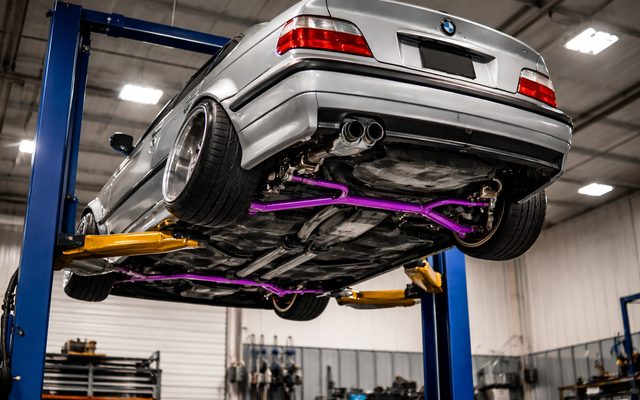
The cornerstone of any successful competitive sliding vehicle is, without question, the platform itself. Certain platforms have attained legendary status within the global oversteer community due to their built-in weight distribution, robust construction, and the vast availability of specialist support available. Picking the right car is the primary and most significant selection a driver will make. For instance, the BMW's E36 3 Series is universally acknowledged as one of the best balanced cars for drifting of history. Its almost ideal balanced front-to-rear weight, coupled with a driven rear axle configuration and bulletproof six-cylinder motors, forms a car that is both easy to handle for newcomers and incredibly effective in the possession of a professional driver. The successor of this philosophy, the BMW E46, builds upon these qualities with a more refined chassis, increased stance for improved confidence, and yet a greater degree of turning capability directly from the manufacturer. A distinct powerful contender in the top-level scene is the C6 generation Corvette.
This muscle-derived performance car introduces a distinctive set of advantages to the sideways discipline, including a lightweight alloy structure, a transaxle-style gearbox and differential unit that helps create an perfect weight distribution, and the immense thrust of a big LS V8 motor. This fusion makes it an complete force on track, capable of initiating and sustaining long angles with seemingly minimal application of acceleration. For drivers desiring exceptional value, the Nissan 350Z stands out as a top-tier choice. It comes from the manufacturer with a stiff body structure, a effective OEM limited-slip differential, and the smooth VQ35DE powerplant that delivers ample power and torque for learning and advancing in the discipline. Its successor, the 370Z model, presents additional advancements in chassis stiffness, suspension design, and overall powerplant power, solidifying its place as a favorite pick among competitive pilots. Further iconic vehicles that merit attention include the lightweight rotary-powered FC generation RX-7, the ever-present S13 Silvia/240SX, the American Ford Mustang SN95, the electronic-equipped BMW E90, and the small yet incredibly fun and instructive Mazda MX-5. Every single one of these cars offers a unique palette of attributes, difficulties, and capabilities, but they all share the basic elements required to be transformed into a serious sliding vehicle.
However, choosing the correct chassis is just the starting point. To release the full performance of every of these vehicles, significant changes to the steering geometry and chassis control systems are completely non-negotiable. This is where the domain of precision drift-spec parts becomes vital importance. The one most impactful upgrade for a purpose-built competition vehicle is the fitting of a maximum-angle drift angle kit. These advanced kits, for example those developed by industry leaders like SLR, are designed to dramatically enhance the car's possible steering angle. A factory street car is highly restricted in how far its steering tires can rotate, a engineering compromise for daily operation. In sliding, but, extreme steering input is frequently necessary to control and sustain a angle. An angle kit substitutes the factory uprights, linkages, and sometimes control arms with pieces that permit the front tires to attain angles over 70 or even 80 degs, compared to a average factory limit of around 40 to 50 degrees.
This tremendously increased capability provides the pilot with significantly more command during a slide, allowing it to be much simpler to begin a drift, hold it through a sweeping turn, and switch fluidly from one direction to the other. The contrast in controllability is nothing short of profound. Combined with a appropriately chosen modification is the equally essential upgrade to the chassis's spring and damper setup. Generic or even expensive road adjustable suspension are generally not designed for the unique and harsh demands of competitive oversteer. A dedicated set of suspension units is of utmost importance. These engineered coilovers feature unique valving and spring strength that are tuned for the violent weight transfer that is characteristic of sliding. When a driver initiates a angle, the car's inertia is transferred violently to the front of the bend. Correct competition coilovers manage this movement in a predictable way, permitting the car to stabilize quickly and offering the operator clear feedback through the wheel and seat. They additionally allow for exact adjustment of ride height, damping stiffness, and cross-weight, which are all key parts of dialing in the car's behavior to a particular venue or piloting approach. In combination, a precision-engineered steering angle kit and a correctly chosen set of competition suspension units constitute the core mechanical foundation upon which all later optimization is constructed.
Once the essential parts is installed, the subsequent vital stage in the development is the precise setting of the chassis's suspension geometry. This is the domain of car suspension tuning, a procedure that can feel daunting to the newcomer but is, in practice, the key to turning a collection of high-performance pieces into a unified and predictable machine. The most critical element of suspension geometry for sliding is definitely camber. Camber is the angle of the rim relative to the vertical axis when observed from the front of the vehicle. When the top of the wheel is tilted inward, this is called negative camber. For drifting, negative camber on the front wheels is generally used and is considered critical. The reason is fundamentally related to tire contact.
When a vehicle is cornering at extreme sideways angles, the frame tilts to the outer of the corner. This chassis roll makes the outside front tire to diminish its optimal footprint with the asphalt. By applying negative camber, the wheel is pre-tilted to counteract this roll. As the vehicle tilts into the bend, the outside front tire becomes more upright on the road surface, optimizing its bite at the critical point when it is absolutely essential for steering authority. Commonly, front axle angles for a serious sliding vehicle range from approximately -3 degrees to as much as -5 degrees or even more, based on the details of the vehicle geometry, tire type, and pilot feel. The back tires also utilize negative camber, but the values are usually more modest and less suspension tuning tool aggressive than the front axle. Overly aggressive camber at the back can result in the chassis extremely prone to oversteer and challenging to manage on power application, as it shrinks the usable grip area of the powered wheels during linear throttle application. Hence, rear axle camber settings are often in the vicinity of -1 degree to -3 degrees, finding a delicate equilibrium between offering enough cornering bite to help in entering and maintaining the drift while simultaneously preserving effective hook-up for acceleration the corner. alignment is only one part of the larger tuning puzzle, which furthermore encompasses toe, self-centering steering, and bump steer adjustment.
Toe setting describes the angle of the tires as seen from above. Positive toe means the front edges of the tires are nearer together than the rear edges, while toe-out means the reverse. For oversteer, a modest amount of front toe out is commonly run to improve the initial directional response, making the vehicle feel more responsive and eager to start a drift. Rear toe angle is typically set to zero or a very small amount of suspension tuning tool positive toe to promote straight-line stability under throttle. Caster is the forward or rearward angle of the steering axis when viewed from the side-on of the chassis. More caster enhances steering feel and high-velocity confidence, and it furthermore adds to negative camber increase during steering, which is extremely useful. Adjusting these parameters is a detailed dance where a adjustment to one parameter can and often will impact the remaining parameters. The traditional method for setting a car's alignment for sliding has for a long time been a time-consuming affair of experimentation and feeling. A driver or engineering group would introduce a modification based on a hunch, drive the car on track, use the driver's subjective feel and feedback, and then make an additional tweak. This process would continue time after time until the chassis felt "good" or the scheduled practice period ran out. This approach is not only incredibly inefficient in terms of man-hours and resources, but it is furthermore fundamentally imprecise.
Human sensation is a famously subjective metric, colored by many elements such as exhaustion, evolving track conditions, temperature, and simply the mood of the operator on that particular day. What feels "tail-happy" on one lap might feel "understeery" on the following pass, causing contradictory information and counterproductive changes. This traditional limitation in car suspension tuning is exactly where modern telemetry systems has stepped in to transform the landscape.
The advent and integration of advanced drift telemetry software has introduced a completely new paradigm for engineering and perfecting competitive sliding vehicles. These tools, exemplified by innovative products like modern telemetry hardware, operate by physically capturing the live physical movement of the vehicle as it is piloted on the course. In contrast to depending on driver feedback, these systems collect measurable information on key variables such as suspension travel, corner velocities, G-force loading, lock position, and throttle and brake position. This collected telemetry is then processed by sophisticated algorithms that can graph and interpret the information in a comprehensible manner. For the very first time, engineers and teams can visualize exactly what the chassis is performing at every moment of a slide. This ability transforms the complete chassis setup procedure. Think about the aforementioned challenge of setting the front axle camber for a specific vehicle. Instead of applying a change from -3 degrees to -3.5 degrees and then running several runs to try and "sense" a change, a telemetry system can provide real-time and definitive information. The tool can display in a chart how the wheel's loading is behaving during the critical phases of a drift: turn-in, sustain, and changing direction. It can show if the present value is permitting the outside front tire to keep maximum loading or if the compound is over-stressed on its outside edge.
The software can after analysis suggest empirical advice for adjustment. Perhaps the information indicates that the outside front tire is still overloading its outer shoulder at -3.5 degrees of camber, implying that even more angle, say -4 degrees, might be warranted. On the other hand, the data might show that the tread is failing to reaching temperature or that the inner edge is degrading unevenly, which could suggest that there is overly aggressive inward lean and a slight lessening back to -3.2 degrees would be more ideal. This level of accuracy and actionable insight was literally unimaginable in the era of exclusively mechanical setup.
The impact of employing a advanced drift telemetry system reaches much further than just dialing in camber. It functions as an priceless suspension tuning guide that is specific to your specific car. When adjusting the shock absorber settings on your suspension, instead of using imprecise guidelines or copying another car's setup, you can employ the telemetry to analyze how the car is behaving in reaction to your changes. The software can graph the suspension travel path over a section of track, showing if the coilovers are controlling the body movement properly or if they are allowing the vehicle to oscillate uncontrollably after a transition. It can assist in pinpointing challenges like hitting the bump stops or losing droop, allowing you to apply educated choices to spring preload, damping rates, or stance. This process extends similarly to the complex task of corner balancing. In addition to camber, the tool can offer data into how adjustments to toe settings and caster angle are affecting the chassis's stability during different maneuvers of a drift. For instance, it can allow you to find the ideal amount of front toe-out for your particular steering rack configuration and piloting style by showing the quickness of turn-in response and the predictability of the vehicle at maximum countersteer. This turns the software an extremely effective performance optimization handbook that is dynamically updated by the actual dynamics of your specific chassis on the circuit. It moves the whole endeavor from a subjective skill into a scientific engineering process.
Moreover, the utility of a tool like data acquisition is not restricted to expert engineers with large resources. For the amateur driver, it functions as an incredible educational tool. It practically offers the tuner with the analysis of a expert race engineer without the associated cost. It drastically shortens the learning curve by providing definitive answers to challenges that would normally take seasons of experimentation to answer. A builder can learn how their specific chassis responds to specific inputs, gaining a deeper understanding of vehicle dynamics in the endeavor. It also opens up advanced performance tuning concepts, allowing anyone with the drive to perfect their car to do so in a efficient and productive way. This is notably valuable in a activity like drifting, where tuning knowledge has traditionally been a tightly held asset among top crews. Today, that capability can be in the hands of any motivated driver.
In the final analysis, the journey to engineering and tuning the perfect competitive drift machine is a comprehensive mission that seamlessly blends time-honored engineering principles with revolutionary data drift angle kits solutions. It begins with the wise selection of a proven car, then built upon the integration of critical competition parts like high-performance angle modification systems and correctly valved drift-spec suspension units. The build then progresses into the detailed stage of car suspension tuning, where settings like camber angle, toe, and caster are carefully configured to suit the chassis's upgraded geometry and the operator's personal style. Finally, and what truly separates the today's methodology from the traditional methods, is the integration of a powerful suspension tuning application. This tool removes the guesswork and trial and error of only seat-of-the-pants setup by delivering quantifiable, actual information on how the car is truly behaving. It acts as an indispensable engineering partner, a definitive alignment optimization handbook, and a comprehensive performance analyzer. In unison, this holistic approach ensures that all element of the drift machine—from the choice of the chassis to the most minute click on the suspension—is refined for maximum success on the competition venue. It signifies the total maturation of the art of sliding, connecting physical driving skill with surgical vehicle setup to build the ultimate effective machines attainable.